Newsroom
The signs are good at Macca's
05.08.2024
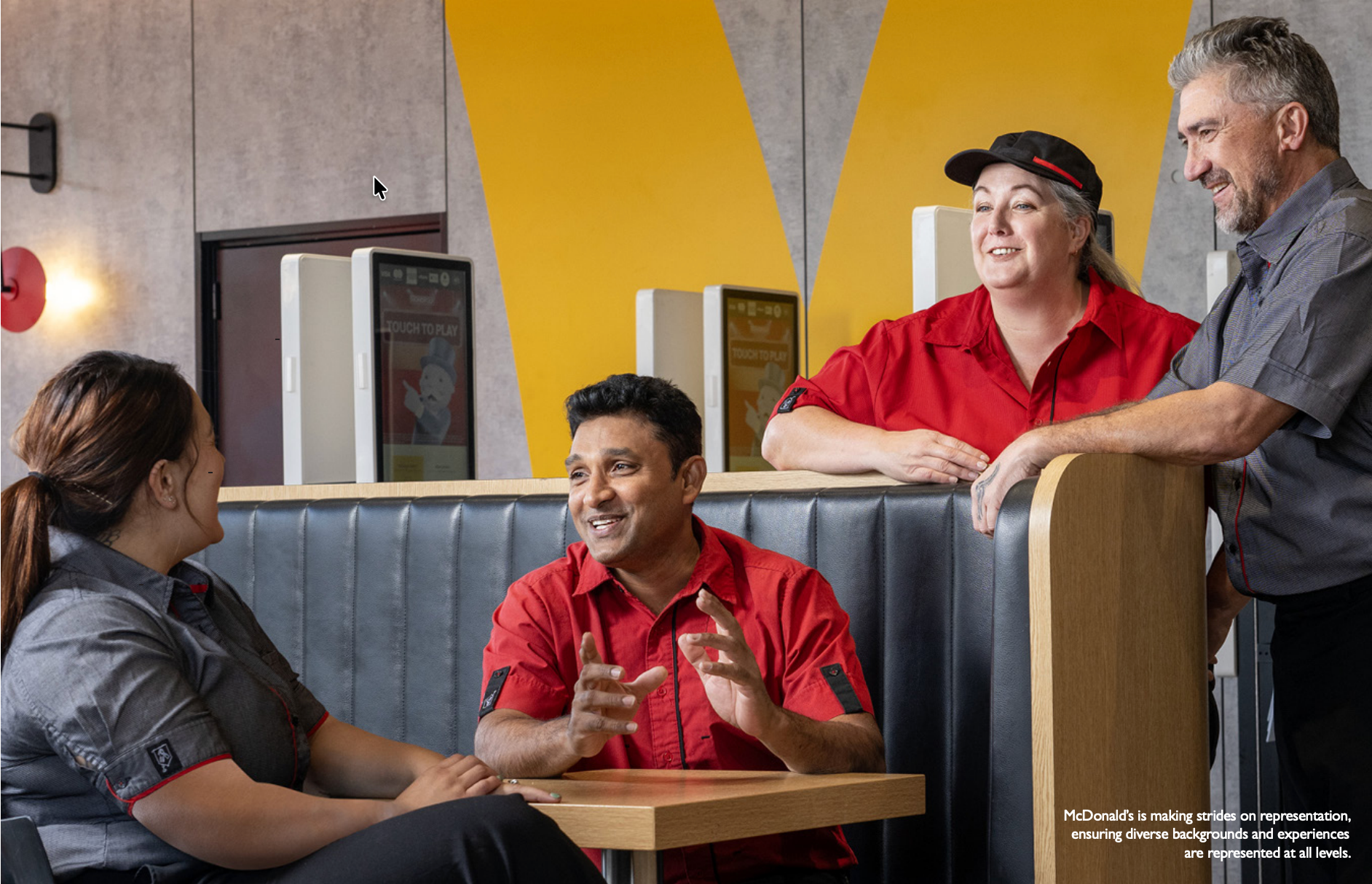
Matamata Macca’s is serving up inclusiveness with a side of New Zealand Sign Language.
A Matamata Macca’s worker fluent in New Zealand Sign Language (NZSL) is proof that inclusiveness is always on the menu at McDonald’s.
Shontel Renshaw has worked fulltime at the Matamata restaurant for the past three-and-a-half years as a crew trainer and support manager. She says being fluent in NZSL – “it’s used frequently in my house” – means she can communicate with deaf and hard of hearing customers with ease.
“Sign language plays into my role when there is a deaf person that comes into the store, because I will know how to communicate with them and can make their experience better with being able to do so,” says Shontel.
Shontel says the best thing about NZSL is that anyone can learn it and she’s especially looking forward to New Zealand Sign Language Week (May 6-12) and the attention it will bring to her ‘second’ language.
“New Zealand Sign Language Week means a lot to me because NZSL is spoken a lot in my home and giving it a special week actually gives a chance for others to learn more about NZSL and maybe learn a few signs too,” she says.
Like any language, there are always The signs are good at Macca’s Matamata Macca’s is serving up inclusiveness with a side of New Zealand Sign Language. ways to improve and Shontel says she’s developed some tips for communicating with NZSL.
“My top tips would be to mouth the words that you are signing so the other person can understand more with both signing and mouthing the words,” she says.
Inclusion means serving everyone
Shontel’s particular set of language skills found a ready home in the McDonald’s family, which prides itself on both an inclusive workplace and an equally inclusive customer experience. After all, to really serve, it is important that Macca’s serves everyone.
Shontel, who considers herself a “quick learner,” has seen her career trajectory flourish since joining Macca’s. “What encouraged me to work at McDonald’s was learning new things and for me to succeed in hospitality positions in the future,” she says.
“When I first started at McDonald’s they straight away got me signed up for a CCO (Crew Certificate of Operations) because I’m a very quick learner and from that point on I knew I wanted to learn more from the job itself,” she says.
“I am still working my way up through McDonald’s and I have had online training done through head office for my management position, plus I have had on-the-job-training for many more.”
Shontel says the best part of her job is all the people she meets along the way.
“I also love how the people I work with have turned into family,” she adds.
Empowering communities
As a leading global brand, McDonald’s is making strides on representation, ensuring diverse backgrounds and experiences are represented at all levels.
Guided by the brand’s values, McDonald’s is committed to becoming better allies and leaders – helping to empower the people and communities the brand serves.
However, there is one value - inclusion - that is so fundamental, it inherently enhances how the brand shows up in every space.
Just like when a deaf customer walks into the Macca’s at Matamata and is served by an NZSL-speaking crew member.
Tips for communicating in sign language
- In conversation, every contact is very important, and people need sufficient personal space for arm movements.
- Face the Deaf person and get their attention before speaking. Remember to maintain eye contact. Don’t turn away when watching them sign to you.
- Deaf people ask for attention by waving, stamping, touching or tapping one another.
- Deaf people need to see what is being said, so they can only pay attention to one person at a time. Wait for the person who is signing to stop before the next person signs.
- Keep lips and face clear of obstruction (e.g. hands, cups, large moustaches, etc.). Dim light can also make it hard to see facial expressions and sign language.
- Speak clearly and a little more slowly and rephrase rather than repeat.
- Avoid background noise when communicating with someone with a hearing aid.